Helping your child overcome dental anxiety starts with small, consistent steps at home and continues with the right dental home. As a parent, you have more influence than you may realize on how your child feels about dental visits. With preparation, the right environment, and a warm team like Dr. JC and the Ivy City Pediatric Dentistry & Orthodontics crew, nervous feelings can become easier to manage. The goal is to make every visit feel safe, predictable, and more comfortable for your child.
What Is Dental Anxiety in Children?
Dental anxiety in kids is a feeling of worry or unease tied to dental visits. It is different from a true phobia, which is more intense and may require additional support. Many kids feel anxious because of unfamiliar sights, sounds, and sensations, especially if they do not know what to expect.
This kind of nervousness is common in young kids. Their brains are still learning how to process new experiences, and a bright light, a buzzing handpiece, or a new face leaning over them can feel like a lot. Common triggers include:
- A past visit that felt uncomfortable
- Worry about the unknown, especially before a first visit
- Picking up on a parent’s own nervousness
- Sensory sensitivities to sounds, smells, or textures
- Stories from siblings, friends, or TV shows
Pediatric dentists complete additional specialty training after dental school, with a focus on child growth, development, and behavior guidance. The good news is that dental anxiety can often improve with the right approach, especially when children have a calm, supportive dental home.
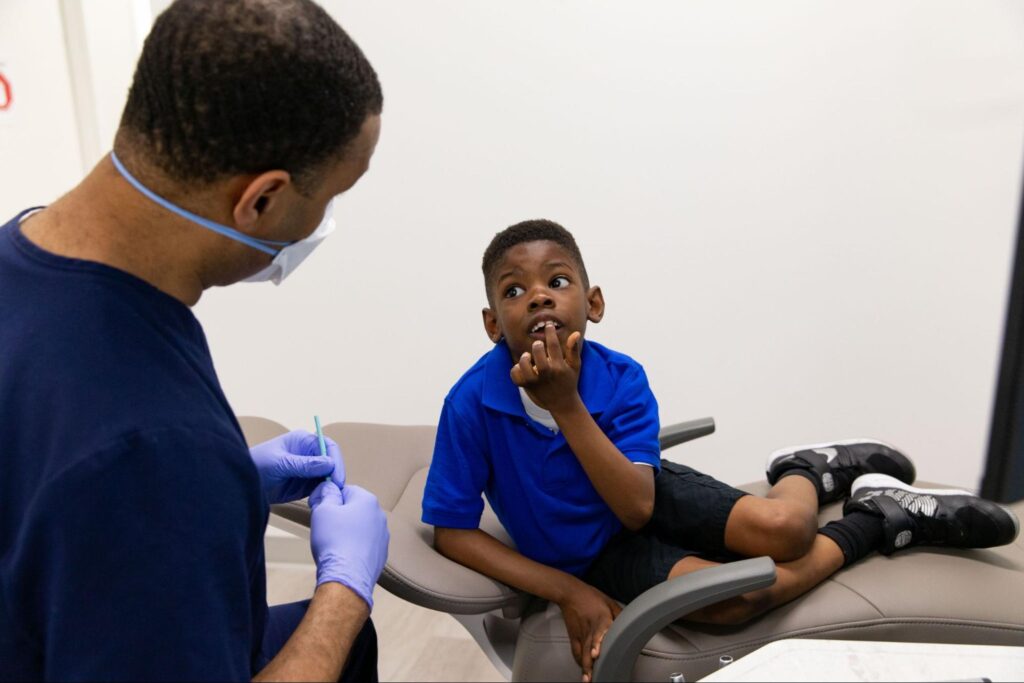
Watch for these signs that your child may be feeling anxious:
- Crying or whimpering before or during the visit
- Clinginess or refusing to leave your side
- Stomachaches or headaches on visit day
- Trouble sleeping the night before
- Refusing to get in the car
Spotting these signs early helps you respond with comfort instead of frustration. If your child is preparing for their first visit, our First Visit page can help you understand what to expect.
How to Help Your Child Overcome Dental Anxiety: Step by Step
To help your child overcome dental anxiety, model calm behavior, prepare them at home with role-play and familiar comfort items, use positive language, and choose a kid-friendly office with experience caring for children. These steps work together to make dental visits feel more familiar and less stressful.
Here’s a step-by-step plan you can start using today.
1. Model calm behavior. Kids follow your example, not just your advice. If you are tense, sighing, or rushing on the way to the visit, your child may pick up on it quickly. Take a breath, smile, and talk about the visit the same way you would talk about any normal part of the day.
2. Bring familiar comfort tools. A favorite stuffed animal, a small blanket, or headphones loaded with a favorite show can help. Familiar items create a sense of safety in a new place. Let your child pick what they want to bring, since giving them a choice helps them feel more in control.
3. Role-play a pretend dental visit at home. Set up a chair, grab a toothbrush and a small mirror, and play “dentist.” Count their teeth, talk about what the real visit may look like, and switch roles so they can be the dentist too. This kind of play takes some of the mystery out of the experience.
4. Pick the right time of day. Schedule visits when your child is well-rested and has had something to eat. A tired or hungry child is more likely to feel overwhelmed. Mid-morning visits often work well for younger children.
5. Use positive, kid-friendly words. Skip words that sound alarming. Instead, use gentle phrases like “the tooth counter,” “tooth vitamins,” or “the tiny mirror.” Praise your child after the visit, even if it did not go perfectly. Small wins add up over time.
6. Choose a kid-friendly pediatric dental home. A pediatric dental office is designed with young patients in mind. The waiting area, the chairs, the explanations, and the way the team speaks can all help children feel more comfortable. At Ivy City Pediatric Dentistry & Orthodontics, Dr. JC and his team work with children every day and help families build positive dental experiences from the start.
Benefits of Addressing Dental Anxiety Early
Tackling dental anxiety while your child is young can make future visits easier. The earlier you build positive associations, the more comfortable dental care may feel over time.
What does your family gain when you address anxiety early?
Here is what your family may gain when you tackle anxiety early:
- Lifelong positive associations. Kids who feel safe at the dental home may be more likely to keep up with dental visits as they grow.
- Fewer skipped visits later. Avoiding care can allow small dental issues to become bigger problems.
- Smoother future visits. Once trust is built, cleanings, X-rays, and ortho consults may feel less intimidating.
- Better home habits. Kids who feel comfortable with their dental team may be more willing to brush, floss, and follow home-care tips.
- Easier orthodontic evaluations. A relaxed child may be more comfortable with exams, digital scans, and early orthodontic checkups.
How do anxiety skills help beyond the dental home?
Early support can also help your child build confidence in other healthcare settings. Skills like deep breathing, communicating discomfort, and learning to trust a provider can carry over to checkups, eye exams, and other appointments. A little support now can help your child feel more confident about care in the future.
Pediatric Dentist vs. General Dentist for Anxious Kids
For nervous kids, a pediatric dentist can be a helpful fit because pediatric dental training focuses on child behavior, growth, development, and age-appropriate communication. That background shapes how the team explains procedures, introduces tools, and helps young patients feel comfortable.
Here’s a side-by-side comparison:
| Factor | Pediatric Dentist | General Dentist |
|---|---|---|
| Training | Additional training focused on children, growth, and behavior guidance | Trained to care for a broad range of patients |
| Environment | Designed with children in mind | May be more general or adult-focused depending on the office |
| Communication | Uses kid-friendly language and tell-show-do techniques | Communication style varies by provider |
| Equipment | Often uses tools and techniques suited for smaller mouths | Tools and setup vary by office |
| Experience with anxious kids | Works with young and nervous patients regularly | Varies by provider and practice type |
| Special needs support | Can adapt care for sensory and developmental needs | Varies by office |
Dr. Jarrett Caldwell and the Ivy City team provide pediatric dental and orthodontic care under one roof, which can be especially helpful for anxious kids. Children get to know one team and one familiar space as they move from early dental care to possible orthodontic care later on. You can learn more on our Meet Dr. Caldwell, Kids Dentistry, and Orthodontics for Kids pages.
What Affects the Cost of Anxiety-Friendly Dental Care?
Many anxiety-friendly strategies are simple steps families can use at no extra cost, including preparation, comfort items, role-play, and choosing a supportive dental office. The cost of the actual dental visit depends on the type of appointment, insurance coverage, and whether additional care is needed.
A few factors can affect overall cost:
- Routine preventive care, such as cleanings, exams, and X-rays, may be covered in part or in full depending on your dental insurance plan.
- Sedation options, if recommended for a longer or more involved visit, may add to the cost.
- Behavior-guidance needs may affect appointment length or treatment planning depending on the situation.
- Specialty care, such as restorative work or orthodontic consultations, has its own pricing structure.
Before your first visit, ask the office about insurance coverage, what is included in a routine visit, and what payment options are available. It helps to call ahead and confirm exactly what your plan covers so there are no surprises later. The Ivy City Pediatric Dentistry & Orthodontics team is happy to walk you through what to expect and answer billing questions. You can also visit our Insurance & Financing page.
Which Children Benefit Most From Anxiety Support?
Almost every child benefits from a thoughtful, calming approach to dental care. Some children need extra support to feel comfortable in the chair.
Your child may especially benefit from anxiety-friendly care if they:
- Had a previous uncomfortable or rushed dental experience
- Are a toddler or young child getting ready for their first visit
- Have sensory sensitivities, autism, ADHD, or other special healthcare needs
- Show physical signs of stress like stomachaches, crying, or trouble sleeping before visits
- Have older siblings who shared upsetting stories
- Live in a household where a parent also feels nervous about dental care
If any of these sound familiar, you are not alone, and your child is not “difficult.” They may simply need a softer introduction to dental care. Dr. JC and the Ivy City Pediatric Dentistry & Orthodontics team take time to build trust slowly, so hesitant children can settle in at their own pace.
Dental Care for Kids in Washington, DC
Ivy City Pediatric Dentistry & Orthodontics provides child-focused dental care for families in Washington, DC. If you are looking for a pediatric dentist in Washington DC, children’s dental care, or a kid-friendly dental home, explore our pages for Pediatric Dentist Washington DC, Washington DC Children’s Dental Care, Washington DC Kids Dentistry, and Washington, D.C. Pediatric Dentist Office.
You can also learn more about Pediatric Dental Services, Pediatric Dental FAQs, Dental Care for Your Baby, and Pediatric Dental Emergencies. To get started, request an Appointment Request or schedule a Kids Dentistry Appointment.
Frequently Asked Questions About Child Dental Anxiety
At what age does dental anxiety typically start?
Dental anxiety can show up as early as toddlerhood, often around ages 2 to 4 when kids become more aware of their surroundings. It can also appear during the preschool and early elementary years, when imagination is strong and unfamiliar experiences may feel bigger. Many kids become more comfortable with positive visits and gentle exposure over time.
How do I calm my child right before a dental visit?
Keep the morning relaxed, offer a light meal, and bring a favorite comfort item. Use simple, upbeat language like “we are going to count your teeth.” Take a few deep breaths together in the car. Avoid over-explaining or making promises about exactly what will happen. Staying calm yourself is one of the biggest ways to help.
Should I stay in the room during my child’s visit?
For many first visits, a parent’s presence can help a child feel safe. As children get older and more comfortable, the team may suggest giving them more independence when appropriate. Dr. JC will guide you on what works best for your child and the type of visit.
What if my child refuses to open their mouth or cries?
That can happen, especially during early visits. The team will focus on patience, tell-show-do techniques, breaks, and trust-building. Sometimes a short, gentle introduction visit is the right starting point before moving into a full cleaning or exam.
When should I consider sedation for a fearful child?
Sedation may be considered when a child needs longer or more involved care and cannot comfortably complete treatment with routine behavior-guidance techniques. It is not usually the first step. Dr. JC will talk with you about whether sedation is appropriate, what options may be available, and how the team approaches safety and comfort.
Ready to help your child feel more comfortable at the dentist? Request an appointment online or call Ivy City Pediatric Dentistry & Orthodontics at 202.953.0171. Our team would be happy to answer your questions and help your child feel more at home.